AI summaries for studying: how they work and how to use them well
What an AI-generated summary does, where it can go wrong and how to check it, so you use it to study and not to fool yourself.
VTeam VestaGuida · 11 October 2026 · 5 min read
What an AI summary does
A language model reads the text you upload and writes a shorter version, usually split by topic. It is handy when you have thirty pages to cut down to two. The catch is that summarising is not studying: the summary tells you what is there, it does not make you remember it.
Where it can go wrong
- It leaves parts out: on long texts a model tends to skip sections. That is why Vesta reads long documents section by section and checks that dates and names from the text show up in the summary.
- It invents details: if the text does not say it, a confident summary can add it. Check numbers and dates against the source.
- It flattens: everything looks equally important. You know what your professor asks, the AI does not.
How to use it well, in four steps
- Read the material once first, even quickly: the summary is there to organise it, not replace it.
- Generate the summary and compare it with your notes: what is missing? what does not add up?
- Correct it by hand: adding or removing a point makes you think about the content.
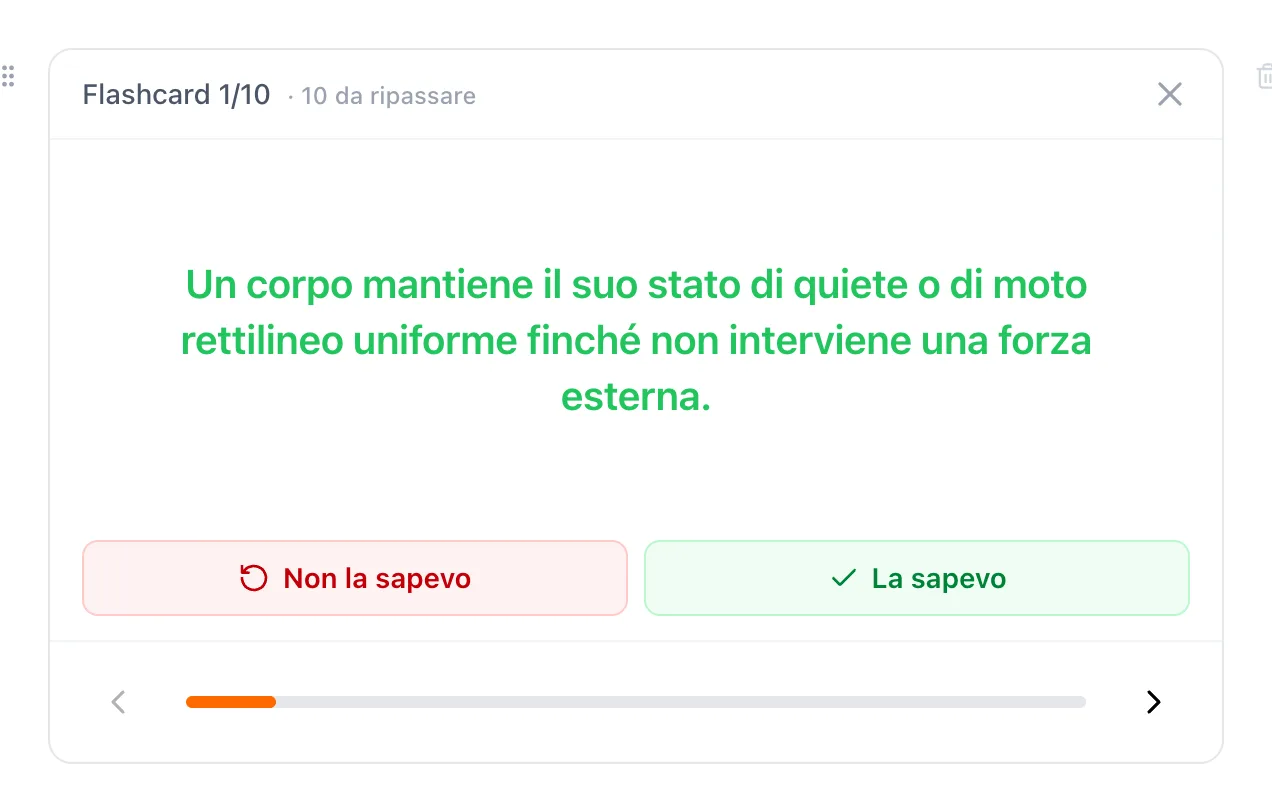
- Turn it into questions: flashcards and a quiz from the same chapters, so you recall instead of rereading.
In Vesta
The summary is split into chapters, with the important points in bold, dates highlighted and a timeline when needed. It costs 1 credit per chapter (from 1 to 5): you see the cost before pressing Generate and credits come back if the generation fails. You can then listen to it with a reading voice (Pro plan) or print it.