Vesta or Anki? Flashcards you make or generated from your notes
Anki is the most used spaced-repetition flashcard program; Vesta creates the material for you. What changes and when to use one, the other or both.
VTeam VestaConfronto · 11 October 2026 · 4 min read
Anki and Vesta start from different problems. Anki gives you a very powerful flashcard program, and you prepare the cards. Vesta starts from your notes and prepares the summary, map, flashcards and quiz.
What Anki states
- A flashcard program that makes you spend more time on challenging material and less on what you already know, scheduling the review for “when you're most likely to forget”.
- Free computer version; AnkiDroid for Android is free; AnkiMobile for iOS is paid.
- Add-ons to extend the features and free synchronisation with AnkiWeb.
- Open source. The main page does not mention AI generation features.
What Vesta does
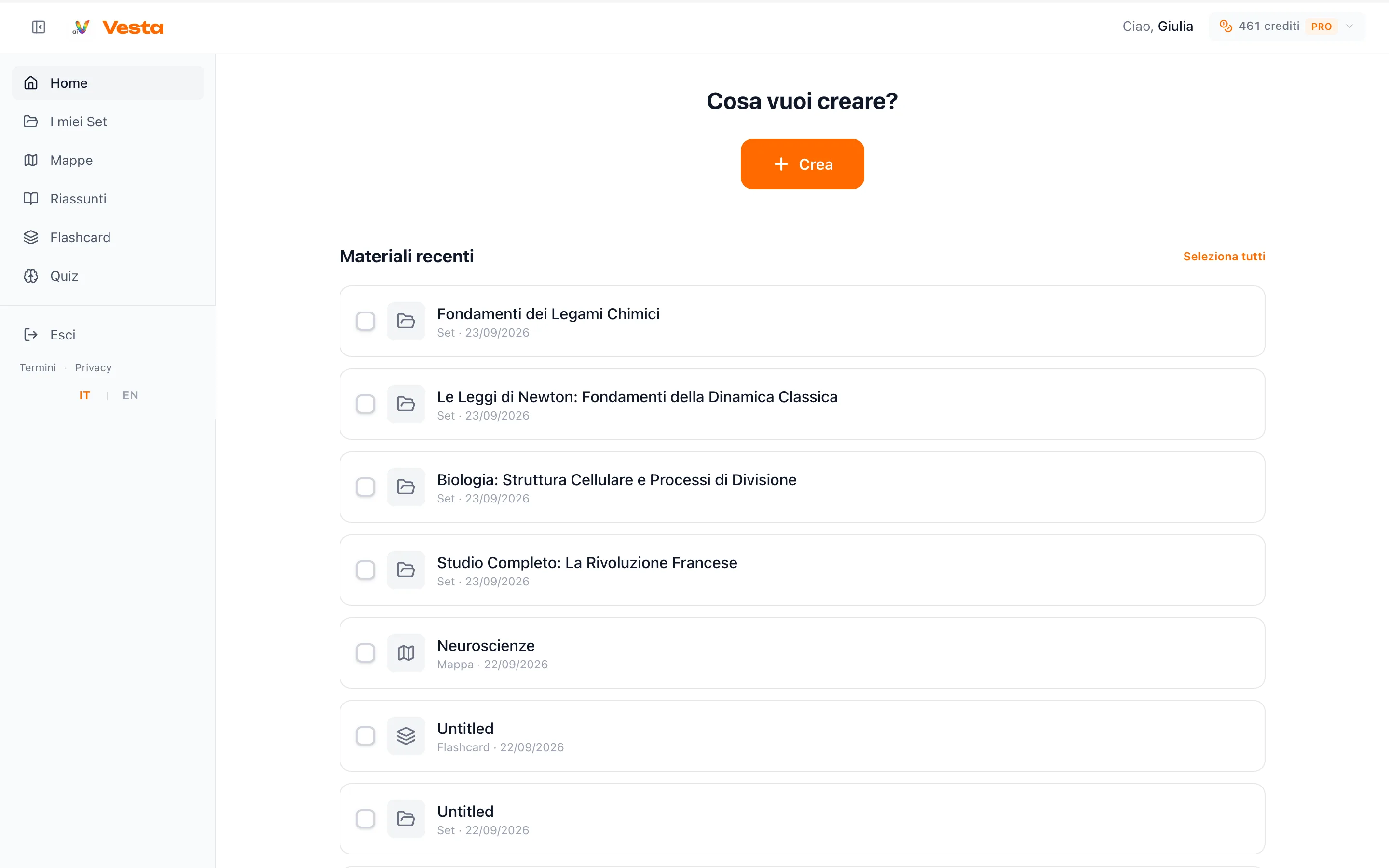
- Generates the material from your document: you do not write the cards by hand.
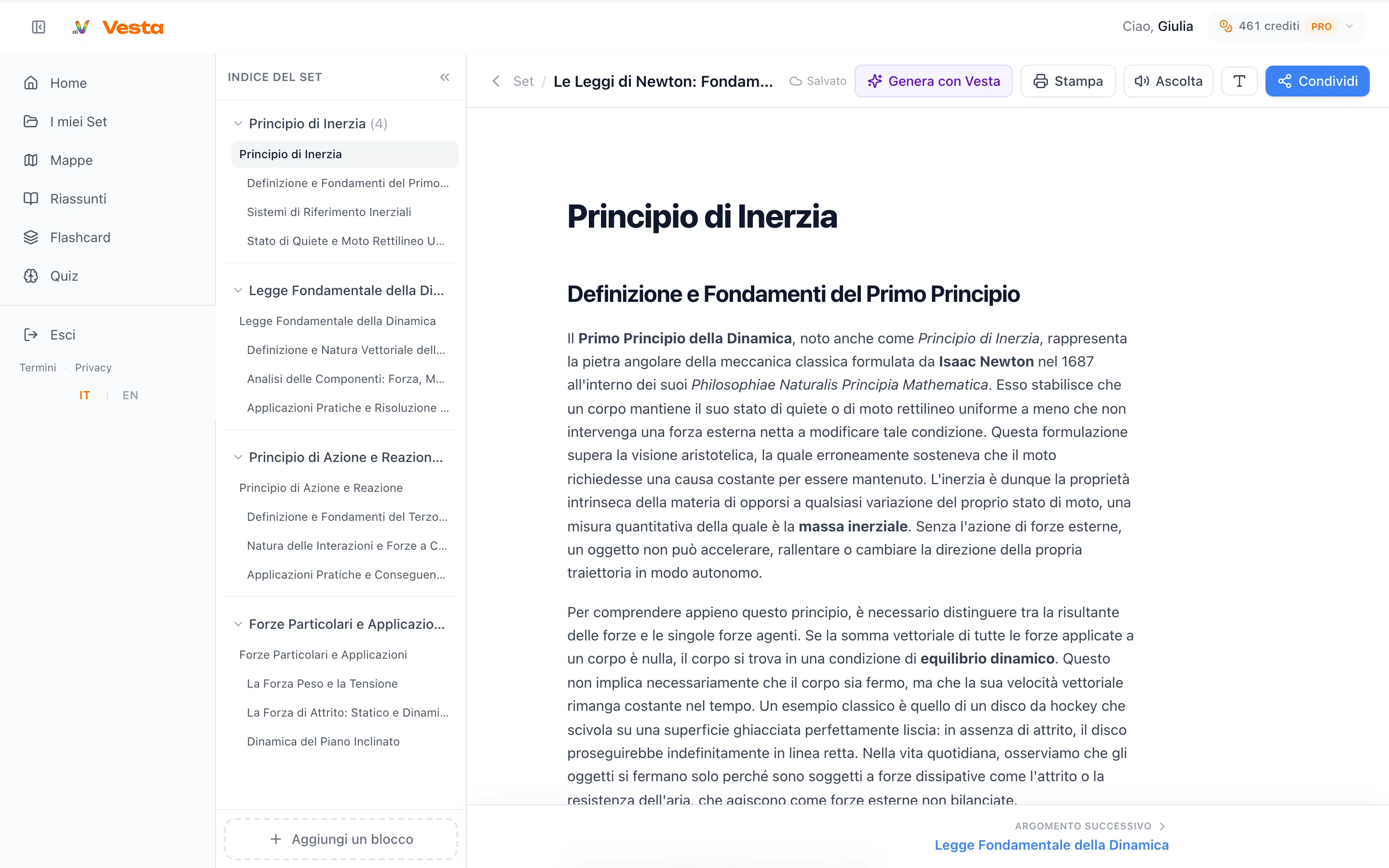
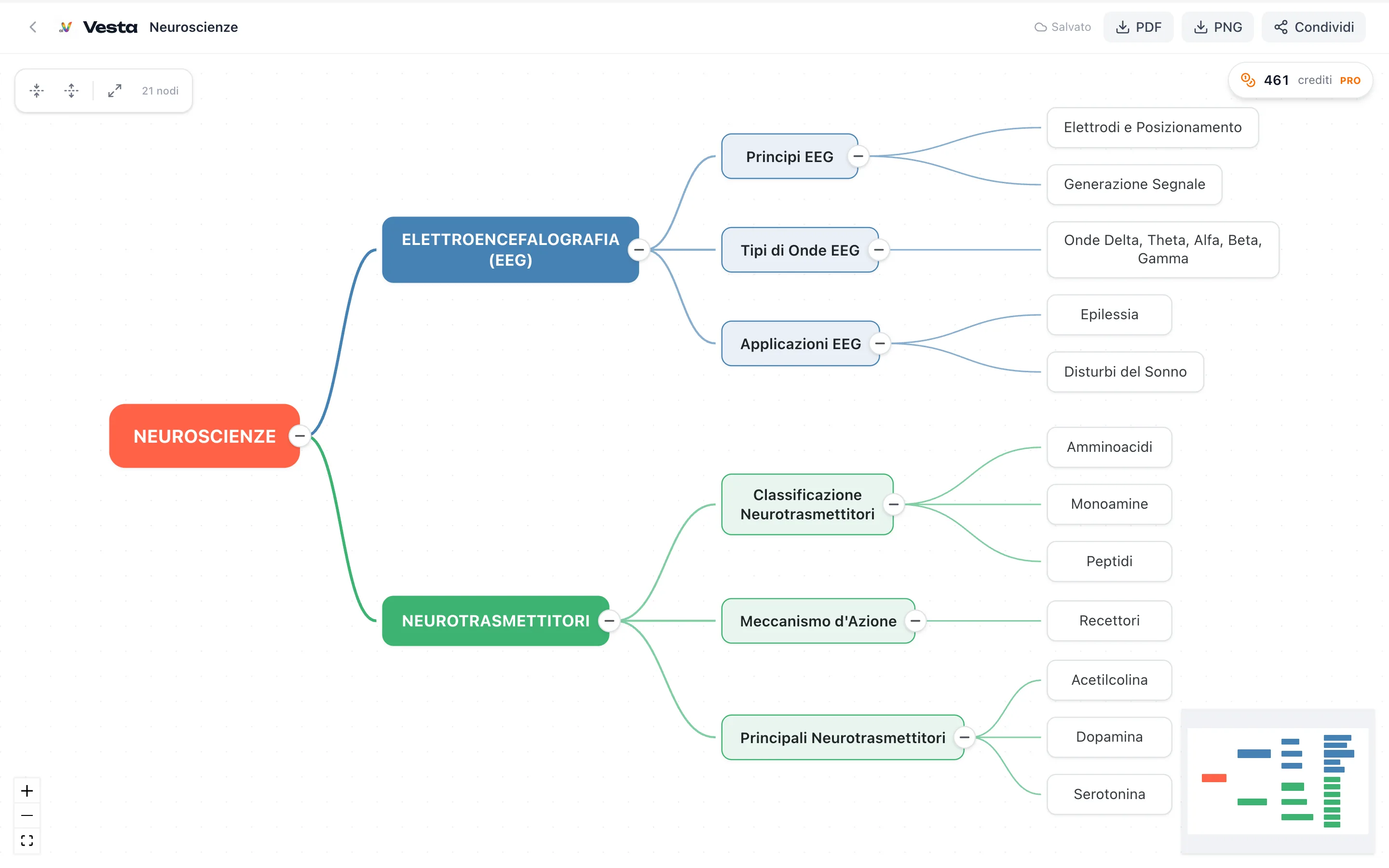
- Besides flashcards it creates a chapter summary, concept map, quiz and questions and answers.
- Box-based review with returns after 1, 3 and 7 days; the quiz repeats only your mistakes.
- Free plan with 5 credits a month; Plus €7.49 and Pro €10.99 a month.
The differences that matter
- Control: Anki is far more customisable (decks, templates, add-ons). Vesta is simpler and less configurable.
- Preparation: with Anki you build the cards (or import other people's decks); with Vesta it generates them and you correct them.
- Cost: Anki on computer is free; Vesta has a free plan with limited credits and paid plans.
- Review algorithm: Anki's is a dedicated, refined scheduler; Vesta's is deliberately simple, box-based.
When to choose one or the other
- Anki if you like building your own cards, want maximum control or study subjects with plenty of ready decks.
- Vesta if you have notes, slides or PDFs and want a set to review in a few minutes.
- Both is a sensible choice: Vesta to understand and organise a chapter, Anki to memorise for the long term what you really need.
For the basics of spaced review: flashcards and spaced repetition.